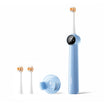







Die Sauberkeit Ihrer elektrischen Zahnbürste ist nicht nur eine Frage des Aussehens – es geht darum, Bakterienkolonien, Schimmel und Zahnpastareste davon abzuhalten, Ihre Mundgesundheit zu beeinträchtigen und den Motor Ihrer Bürste zu zerstören.
Ihre elektrische Zahnbürste ist ein Präzisionswerkzeug, das tägliche Pflege verdient. Ohne eine konsequente Reinigungsroutine wird sie vom Gesundheitsgerät zum Mikrobenhotel. Im Folgenden erklären wir genau, was zu reinigen ist, wann Sie es reinigen sollten und wie, damit Ihre Bürste leistungsstark und sicher bleibt.
Warum die Reinigung Ihrer elektrischen Zahnbürste wichtig ist
Ein schmutziger Bürstenkopf und Griff sehen nicht nur unschön aus – sie wirken aktiv gegen Ihre Hygiene. Wenn Sie die Reinigung auslassen, lassen Sie Bakterien und Schimmel genau dort gedeihen, wo Sie zweimal täglich Ihren Mund hinstellen.
Die versteckten Gesundheitsrisiken
Wenn Sie nur die Borsten ausspülen, ignorieren Sie die warmen, feuchten Spalten, in denen sich Biofilm bildet. Dieser Schleim kann Streptococcus mutans (die kariesverursachenden Bakterien), Candida-Hefen und Badezimmerschimmel wie Aspergillusbeherbergen. Diese Krankheitserreger können zu wiederkehrendem Mundgeruch, Zahnfleischentzündungen und sogar Reinfektionen nach einer Erkältung führen. Wenn Sie empfindliches oder blutendes Zahnfleisch haben, ist das Risiko erhöht – weshalb die Wahl der richtigen Zahnbürste entscheidend ist. Die RANVOO AirJet X5 elektrische Zahnbürste, entwickelt mit sanfter Schaumstofftechnologie und für die Zahnfleischpflege konzipiert, bietet ein gründliches und dennoch sicheres Reinigungserlebnis, das die Wahrscheinlichkeit verringert, bestehende Empfindlichkeiten zu verschlimmern.
Leistung und Akkulaufzeit
Eingetrocknete Zahnreste wirken wie Klebstoff. Sie zwingen den Motor, härter zu arbeiten, reduzieren die Vibrationsstärke und zehren langsam an der Akkulaufzeit. Eine saubere Bürste behält ihre volle oszillierende oder sonische Leistung, was bei jeder Sitzung eine bessere Plaqueentfernung bedeutet.
Welche Teile Ihrer elektrischen Zahnbürste benötigen regelmäßige Aufmerksamkeit?
Denken Sie über die Borsten hinaus. Eine vollständige Reinigung umfasst vier verschiedene Bereiche:
- Bürstenkopf – Borsten, den inneren Hohlraum und die Gummidichtung, an der der Kopf befestigt wird.
- Griff / Gehäuse – Knopfnähte, Silikongriffe und der Metallstift oben.
- Ladestation / Ständer – die Vertiefung, in der sich Tropfen sammeln, und die elektrischen Kontakte.
- Zubehör – Reiseetui und Bürstenkopfüberzüge.
So wie Systemadministratoren Konfigurationen abfragen, um versteckte Probleme frühzeitig zu erkennen, sollten Sie Ihre Zahnbürsteninspektion mit derselben methodischen Denkweise behandeln.
Wann sollten Sie Ihre elektrische Zahnbürste reinigen?
Machen Sie diesen Rhythmus zur Gewohnheit:
Nach jeder Verwendung – spülen und trennen.
Wöchentlich – Verbindungsstück und Dichtung gründlich reinigen.
Monatlich – Bürstenkopf desinfizieren, Ladegerät schrubben und Griff gründlich abwischen.
Eine Schritt-für-Schritt-Tiefenreinigung
Diese Routine dauert 5–7 Minuten und stoppt den Ekel, bevor er beginnt.
1. Vollständige Zerlegung und thermische Spülung
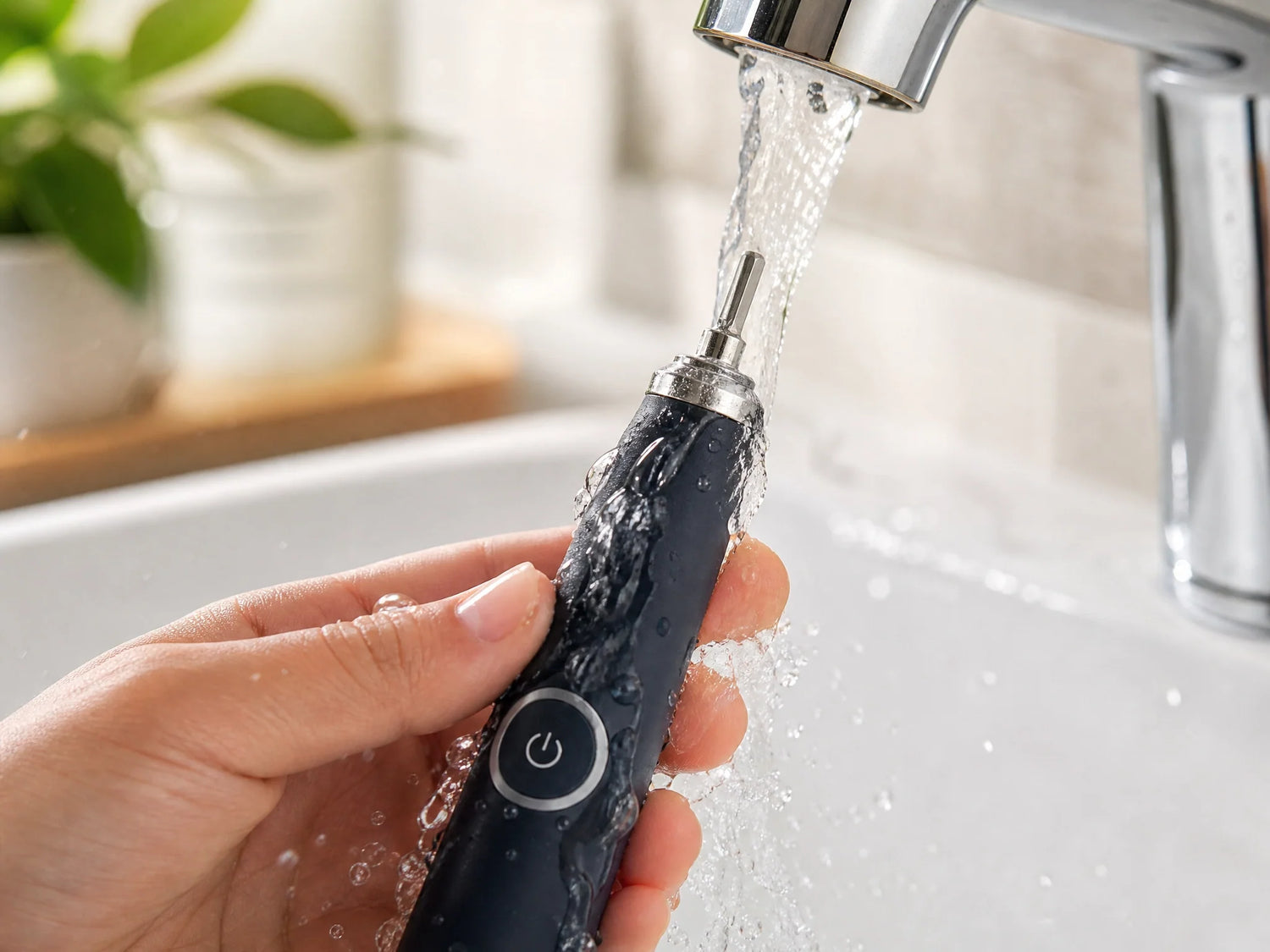
Drehen Sie den Bürstenkopfab. Spülen Sie ihn unter heißem, fließendem Wasser, während Sie die Borsten mit dem Daumen massieren. Die Hitze hilft, die Zahnpastareste (Silica- und Natriumlaurylsulfat-Film) aufzulösen, die kaltes Wasser zurücklässt. Machen Sie dasselbe mit der Metallantriebswelle am Griff – nur kurz abspülen, niemals den Körper eintauchen.

2. Den versteckten Schlamm am Verbindungsstück gezielt angehen
Ziehen Sie die Gummi- dichtung oder Dichtung an der Basis des Bürstenkopfs zurück. Verwenden Sie eine Interdentalbürste oder ein Wattestäbchen, das in Seifenwasser getaucht ist, um sanft die Innenseite des Hohlraums zu schrubben. Dieser übel riechende Protein-basierte Film ist das Ergebnis von Speichel und Zahnpasta, die sich mit eingeschlossener Wasser/Feuchtigkeitvermischen. Wischen Sie den Metallstift am Griff auf die gleiche Weise ab.
3. Den Griff desinfizieren, ohne die Elektronik zu zerstören
Befeuchten Sie ein weiches Tuch mit milder Spülmittellösung oder einem hypochlorigen Säurespray. Wischen Sie den gesamten Griff / Körper, wobei Sie besonders auf die Naht des Einschaltknopfs achten. Tauchen Sie den Griff niemals unter Wasser und geben Sie ihn nicht in die Spülmaschine – die IP-Schutzart (wie IPX7) bedeutet, dass er Spülen, nicht aber Eintauchen aushält.
4. Bewährte Desinfektionsmethoden für den Bürstenkopf
Vergleichen Sie drei sichere Ansätze:
| Methode | So wird es gemacht | Am besten geeignet für | Vorsicht |
|---|---|---|---|
| Einweichen in 3% Wasserstoffperoxid | Borsten 10–15 Minuten einweichen, dann gründlich abspülen. | Tiefenreinigung, tötet die meisten Bakterien und Hefen ab. | Vermeiden Sie die tägliche Anwendung, um die Borstenintegrität zu erhalten. |
| Spülung mit antibakteriellem Mundwasser | Kopf 30 Sekunden in alkoholfreiem Mundwasser schwenken. | Schnelle Auffrischung zwischen wöchentlichen Tiefenreinigungen. | Alkoholhaltige Spülungen können Nylonborsten mit der Zeit angreifen. |
| UV-C-Sanitizer | In ein spezielles UV-Sanitizing-Case legen und einen Zyklus durchführen. | Einfache tägliche Desinfektion ohne Chemikalien. | Entfernt keine physischen Rückstände; benötigt dennoch wöchentlich eine manuelle Reinigung. |
[Bildgenerierungs-Prompt: Eine Reihe von drei Bürstenköpfen: einer eingeweicht in einem kleinen Glas mit klarem Wasserstoffperoxid, einer in ein UV-Sanitizer-Case abgesenkt und einer auf einem sauberen weißen Handtuch liegend, minimalistische Stillleben-Stil, helles Badezimmerlicht]
5. Reinigen der Ladestation und des Kabels
Ziehen Sie den Stecker der Ladestation. Verwenden Sie einen trockenen Wattestäbchen, um losen Staub zu entfernen, tauchen Sie dann ein weiteres Wattestäbchen in Isopropylalkohol und schrubben Sie vorsichtig die Kontakte. Gegen den gefürchteten „Pink Slime“ (oft Serratia marcescens), der sich von Phosphat aus Zahnpasta-Rückständen ernährt, schrubben Sie mit einem mit Essig befeuchteten Tuch. Lassen Sie alles vollständig trocknen, bevor Sie es wieder anschließen.
6. Der kritische Trocknungsprozess
Trocknen Sie die Metallwelle mit einem fusselfreien Tuch ab. Schütteln Sie überschüssiges Wasser vom Bürstenkopf und lagern Sie Kopf und Griff getrennt aufrecht in einem offenen, luftdurchlässigen Halter. Trocknen Sie sie vollständig, bevor Sie sie wieder zusammensetzen, um Dichtungsgummi-Fäulnis und Schimmel zu vermeiden. Verwenden Sie nur eine Reiseetui , wenn die Zahnbürste knochentrocken ist.
So bewahren Sie Ihre Zahnbürste für maximale Hygiene auf
Tun Sie Folgendes: * Bewahren Sie den Griff aufrecht mit abgenommenem Kopf auf. * Halten Sie mindestens einen Meter Abstand zur Toilette (um Toilettenspray zu vermeiden). * Verwenden Sie einen gut belüfteten Halter, nicht eine Schublade oder einen geschlossenen Schrank.
Vermeiden Sie Folgendes: * Setzen Sie niemals eine Kappe auf einen nassen Bürstenkopf – das wird zu einer Schimmelbrutstätte. * Bewahren Sie die Zahnbürste nicht flach auf, da so Wasser in der Kopfverbindung eingeschlossen wird. * Bewahren Sie sie nicht auf einem feuchten Ladeständer auf, ohne sie regelmäßig abzuwischen.

Langfristige Wartungsgewohnheiten
Halten Sie sich an den Austauschplan
Ersetzen Sie Ihren Bürstenkopf alle 3 Monate, oder früher, wenn die Borsten auseinanderstehen. Selbst perfektes Reinigen erreicht nicht die innere Füllung, die im Laufe der Zeit zu einem Bakterienreservoir wird.
Wählen Sie die richtigen Reinigungsmittel
- Sicher: mildes Spülmittel, verdünnter weißer Essig, 3% Wasserstoffperoxid, hypochlorige Säure.
- Vermeiden: Bleiche (korrodiert Gummi), Aceton (lässt Kunststoff reißen), kochendes Wasser (zerstört Elektronik und Borsten).
Alltägliche Fehler, die Biofilm erzeugen
- Den Bürstenkopf nach dem Gebrauch aufgesetzt lassen.
- Die Zahnbürste in einem luftdichten Behälter aufbewahren.
- Den Kopf zu fest anziehen (quetscht die Dichtung).
- Einen Griff teilen, ohne die Antriebswelle zwischen den Benutzern zu reinigen.
- Die Ladestation ignorieren, bis sichtbarer Schimmel auftritt.
Eine saubere elektrische Zahnbürste ist kein Luxus – sie ist die Grundlage für jeden effektiven Bürstenstrich. Für Menschen mit empfindlichem Zahnfleisch macht das richtige Werkzeug den entscheidenden Unterschied. Die RANVOO AirJet X5 elektrische Zahnbürste mit ihrer patentierten „Bubble-Brush“-Technologie sorgt für eine gründliche Reinigung ohne die Härte, die Blutungen oder Schmerzen auslösen kann. Mit diesen einfachen Gewohnheiten und einer auf Ihre Bedürfnisse zugeschnittenen Bürste schützen Sie Ihr Lächeln und Ihre Investition über Jahre.