
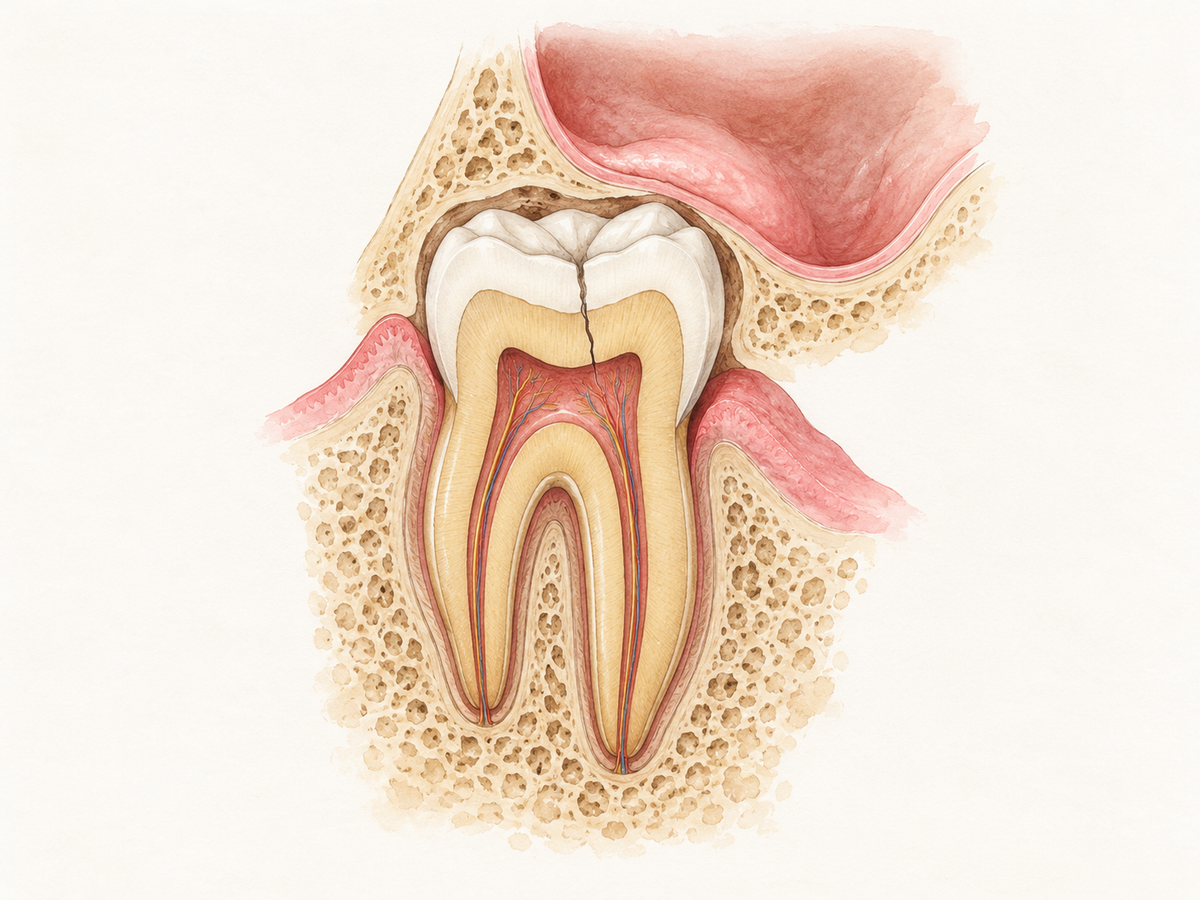
Tooth pain does not always mean you have a cavity. The same ache can come from a cracked tooth, receding or infected gums, nighttime grinding or clenching, a failing old filling, an impacted wisdom tooth, or even pressure from your sinuses or jaw muscles. Since each cause needs a different treatment, the most useful step is to notice how and when the pain shows up, then have a dentist confirm the source.
The main thing to know: toothaches have many non-cavity causes. The type of pain — sharp, dull, biting-related, or sinus-related — can offer clues, but only a dental exam can identify the real cause.
What Kind of Pain Are You Feeling?
Dentists often ask about the “character” of tooth pain: what it feels like, how long it lasts, and what sets it off. You can use those same questions at home to get a clearer picture before you call the dental office.
- Sharp and brief pain: Often points to a crack, exposed root, or loose filling.
- Dull, constant, or throbbing pain: More likely an inflamed nerve or an infection around the root. It can feel like the ache is spreading.
- Pain only when you bite or press: May come from a crack, failing restoration, or inflammation in the ligament around the root.
- Pain triggered by hot, cold, or sugar: Often means exposed root surface or early nerve irritation.
These are general clues, not a diagnosis. A painful tooth can feel very different from one person to the next, and more than one cause can overlap, according to clinical guidance on tooth pain diagnosis.
When you describe the pain to a dentist, try to include:
- Where it hurts
- What the pain feels like
- How long it lasts
- What makes it worse or better
Hidden Culprits: Non-Cavity Causes of Toothaches
Any of these conditions can irritate the dental pulp, the nerve and living tissue inside the tooth, or the tissues around it. That irritation is what you feel as a toothache.
Cracked or fractured tooth. Chewing can make a crack open slightly, causing sudden sharp pain. Over time, bacteria can enter the crack and irritate the nerve. Pain on biting and sensitivity to cold are common signs of a cracked tooth, according to a review on cracked teeth.
Gum disease or receding gums. Tooth roots do not have the same hard enamel protection as the visible crown. When gums pull back, the roots are exposed and can become painfully sensitive. An infection around the gum and supporting tissues can also cause pressure and a throbbing ache near a tooth, as described in guidance on dental pain.
Bruxism: teeth grinding or clenching. Repeated heavy force on the teeth and jaw muscles can cause a dull, sore feeling, especially in the morning. It can also make small cracks worse. Tension in the chewing muscles and jaw joint is a common source of this type of discomfort, according to a practical guide on jaw-related pain.
Impacted wisdom tooth. A wisdom tooth that cannot fully come in may trap food and bacteria under the gum, causing pressure, swelling, and pain in the back of the mouth. This can worsen with eating or brushing, as noted in primary care dental pain guidance.
Old filling or crown that has broken down. A worn or cracked restoration may leak. Saliva, food, and bacteria can sneak underneath and irritate the deep part of the tooth, producing pain that feels like a cavity even when there is not one.
Spotting the Difference: A Symptom-to-Cause Check
This table can help you compare your symptoms with some possible causes. It is not a final diagnosis, but it can help you know what to mention when you see a dentist.
| What you feel | Possible cause worth checking |
|---|---|
| Sharp pain when biting or pressing one tooth | Cracked tooth, failing filling or crown, or inflamed ligament around the root |
| Brief sensitivity to cold near the gumline | Receding gums or exposed root |
| Dull, throbbing ache that may wake you up | Inflamed nerve inside the tooth or infection around the root |
| Upper back teeth ache with a stuffy nose or sinus pressure | Sinus-related referred pain |
| Sore teeth or jaw on waking or after a stressful day | Clenching, grinding, or jaw muscle strain |
| Sensitivity to sweets | Exposed root, leaky restoration, or a crack |
The same symptom can have different causes, which is why a dentist combines your story with tests rather than relying on any single clue, according to a review of painful tooth mechanisms.
The Sinus and Referred Pain Trap
Your upper back teeth sit very close to the maxillary sinus, a hollow space in the cheekbone. When the sinus lining swells from a cold, allergy, or sinus irritation, it can press on the tips of those tooth roots. That pressure can feel exactly like a toothache.
Another twist is referred pain, meaning pain that is felt in a different place from its true source. The trigeminal nerve, the main facial nerve, carries pain signals from the teeth, sinuses, chewing muscles, and jaw joint. Sometimes the brain misreads the signal’s source. That is why sinus congestion and strained jaw muscles can both show up as an ache in a tooth, as described in a systematic review on non-dental toothache.
The temporomandibular joint (TMJ), or jaw joint, and the muscles that move your jaw are common sources of this trick. If you clench at night or hold tension in your jaw, the discomfort may appear as a dull ache in your molars rather than in the joint itself.
Red Flags: When to Get Help Right Away
Most toothaches can wait for a regular dental exam, but some signs mean you should stop guessing and get urgent care.
- Swelling in the face, cheek, or jaw that is growing quickly
- Swelling that spreads toward the eye or neck
- Fever with tooth pain
- Difficulty breathing or swallowing
- A broken tooth edge that cuts the tongue or cheek
- Pain that stays severe despite over-the-counter pain medicine
These can signal a spreading infection or an injury that needs prompt attention. Guidance on dental infections and emergency signs emphasizes that rapidly spreading swelling, breathing trouble, and difficulty swallowing require urgent evaluation.
If you are having trouble breathing or swallowing, go to an emergency department or call emergency services.
How Your Dentist Confirms the Real Cause
Your dentist works like a detective. They combine several tests instead of relying only on the spot that hurts.
- Visual exam: Looking for swelling, gum problems, broken fillings, and visible cracks.
- Tap test: Tapping each tooth to find which one hurts under pressure.
- Temperature test: Applying cold or heat to see how the nerve responds.
- Dental x-rays: Showing what is hidden below the gumline, such as root infections, bone loss, impacted teeth, and some cracks.
- Putting it together: This systematic ruling-out process is called differential diagnosis. The idea is to match the symptoms and test results to the most likely cause instead of guessing, as explained in a guide to toothache diagnosis.
This is why a dentist may test several teeth, even ones that do not hurt. Finding the true source helps avoid treating the wrong tooth.
Your Next Steps for Relief
While you wait for your appointment, you can:
- Avoid chewing on the sore side.
- Steer clear of very hot, cold, sweet, or hard foods that trigger pain.
- Use over-the-counter pain relief only if it is safe for you and follow the label directions.
- Do not assume antibiotics are needed. Most tooth pain comes from inflammation or mechanical problems, not from an infection that antibiotics can fix. Dental pain usually requires actual dental treatment, according to an evidence-based guideline on antibiotics for dental pain.
Book a dental exam. The right treatment depends on the exact cause: a cracked tooth may need a restoration or crown, gum disease may need periodontal treatment, sinus-related pain may improve when the sinus problem is treated, and jaw muscle pain often responds well to conservative care. For chronic jaw-related pain, clinical guidelines favor physical therapy, self-care, and other conservative approaches over irreversible treatments.
Your pain is real, and there is a logical next step. Rather than guessing, get the right exam so you can treat the true cause.



Hinterlasse einen Kommentar
Diese Website ist durch hCaptcha geschützt und es gelten die allgemeinen Geschäftsbedingungen und Datenschutzbestimmungen von hCaptcha.