
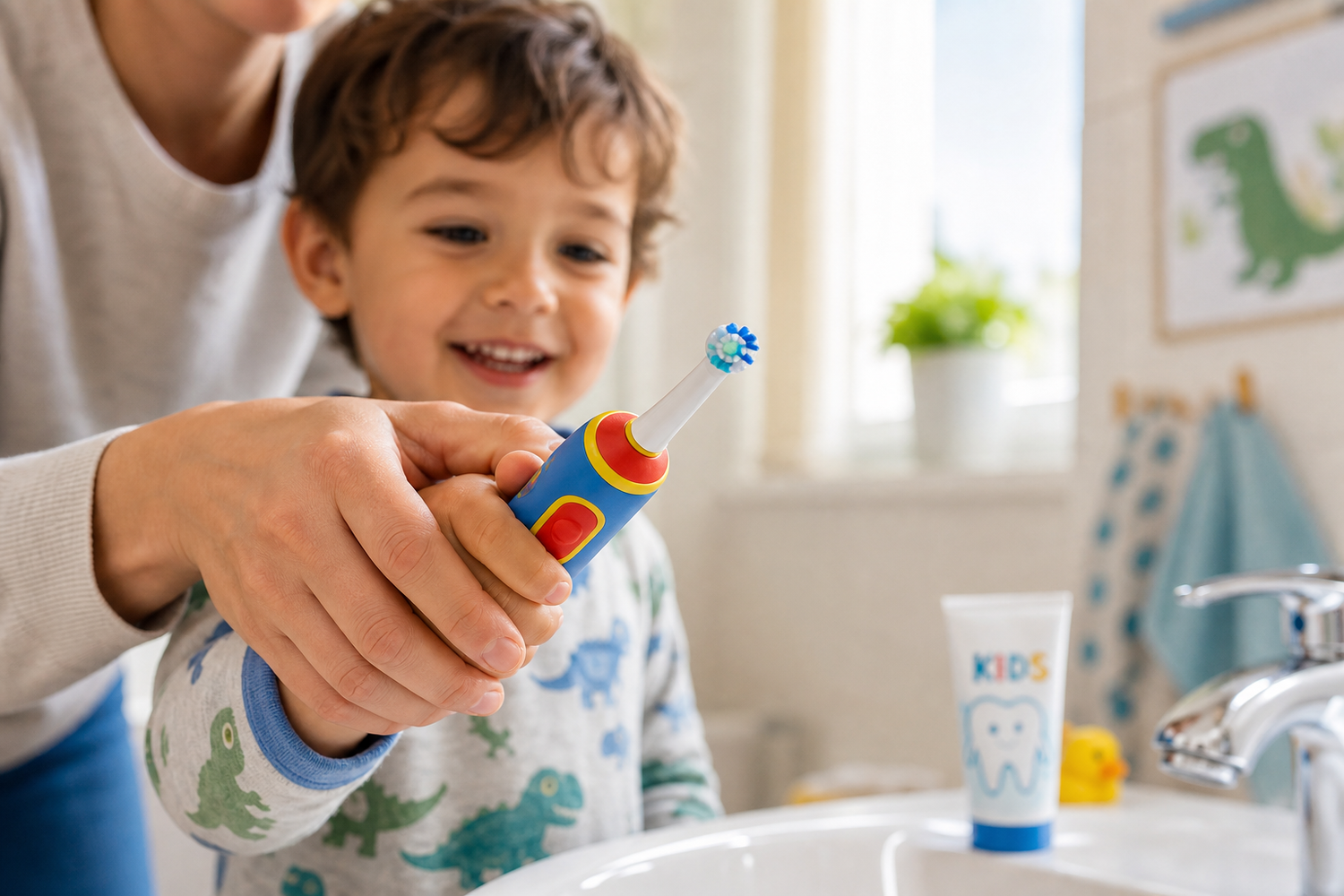
Die kurze Antwort: Ja, elektrische Zahnbürstenkönnen für Kinder sicher und sehr effektiv sein – aber nur, wenn sie im richtigen Alter, mit entsprechender Aufsicht und mit einer speziell für Kinder entwickelten Bürste eingeführt werden. Die meisten Kinderzahnärzte sagen, dass 3 Jahre der früheste Zeitpunkt ist.
Eltern fragen sich oft, ob die summende, vibrierende Bürste, die bei Erwachsenen so gut funktioniert, eine kluge – oder sichere – Wahl für ihr Kind ist. Die Antwort ist kein einfaches Ja oder Nein. Es hängt vom Alter Ihres Kindes, seinen motorischen Fähigkeiten und davon ab, wie Sie den Prozess begleiten. Wenn es richtig gemacht wird, kann eine elektrische Zahnbürste nächtliche Zahnputzkämpfe in eine gesündere Gewohnheit verwandeln.
Warum wechseln? Die bewährten Vorteile von elektrischen Zahnbürsten für Kinder
Der Wechsel zu einer elektrischen Zahnbürste ist nicht nur eine Neuheit. Die Wissenschaft hinter der Drehbewegung bietet echte Vorteile für heranwachsende Lächeln.
- Überlegene Plaque-Entfernung. Eine klinische Studie bei Kindern im Alter von 3–6 Jahren ergab, dass eine oszillierend-rotierende elektrische Bürste 32,3 % mehr Plaque entfernte als eine manuelle Bürste. Bei 7–9-Jährigen stieg der Unterschied auf 51,9 % mehr entfernten Plaque.
- Integrierte Timer setzen die 2-Minuten-Regel durch. Die meisten Kinder hetzen. Ein Timer oder ein musikalischer Taktgeber hilft ihnen, lange genug zu putzen, um wirklich jede Oberfläche zu reinigen.
- Spaßfunktionen verbessern die Bereitschaft. Charakterthemen, Lichter und Begleit-Apps verwandeln das Zähneputzen in ein Spiel. Wenn Kinder begeistert sind, putzen sie öfter und gründlicher.
- Einfacher für kleine Hände. Die motorisierte Bewegung übernimmt die Schrubbarbeit, sodass ein Kind mit sich entwickelnder Feinmotorik trotzdem eine gründliche Reinigung erreichen kann.

Ab wann können Kinder eine elektrische Zahnbürste benutzen? Altersgerechte Richtlinien
Die „magische Zahl“ ist nicht für alle gleich, aber Entwicklungsschritte geben uns einen klaren Fahrplan.
Säuglinge und Kleinkinder (Alter 0–3): Warum manuell die sicherste Wahl ist
Bei Babys und jungen Kleinkindern bleiben Sie bei einer manuellen Zahnbürste. Der Mund eines Säuglings ist winzig, das Zahnfleisch empfindlich, und sie haben keine Fähigkeit, den Druck zu kontrollieren. Am wichtigsten ist, dass sie nicht verstehen können, wie man den Bürstenkopf auf jedem Zahn still hält. Eine kleine, weiche manuelle Bürste ermöglicht es Ihnen, durchbrechende Zähne sanft zu reinigen, ohne das Risiko, dass Vibrationen sie erschrecken oder verletzen.
Vorschulkinder (Alter 3–6): Elektrische Bürsten unter voller Aufsicht einführen
Mit etwa 3 Jahren sind viele Kinder bereit für eine elektrische Zahnbürste – aber nicht, um sie allein zu benutzen. Dies ist das Fenster, um ein kindgerechtes Modell einzuführen. Bevor Sie beginnen, prüfen Sie auf diese Bereitschaftssignale:
- Ihr Kind kann Zahnpasta ausspucken, statt sie zu schlucken.
- Es beißt nicht mehr auf den Bürstenkopf.
- Es ist neugierig auf Ihre eigene elektrische Bürste und möchte sie ausprobieren.
Platzieren Sie immer eine erbsengroße Menge fluoridhaltiger Zahnpasta auf dem Bürstenkopf, führen Sie seine Hand in einem 45-Grad-Winkel zum Zahnfleischrand und lassen Sie die Bürste die Arbeit machen. Sie übernehmen die Bewegung; es liefert die Begeisterung. In dieser Phase ist die elektrische Bürste ein gemeinsames Werkzeug, kein Solo-Werkzeug.

Grundschulkinder und Teenager (Alter 7+): Unabhängige Gewohnheiten aufbauen
Mit etwa 7 Jahren haben viele Kinder die Koordination, um selbst zu putzen – aber das bedeutet nicht, dass Sie aufhören zu kontrollieren. Die Aufsicht sollte fortgesetzt werden, bis Sie sicher sind, dass sie jeden hinteren Zahn und den Zahnfleischrand ohne Hetzen erreichen können.
- Viele 7-Jährige profitieren noch von einem täglichen „Kontrollblick“ der Eltern.
- Kinder mit Zahnspangen erhalten einen noch größeren Vorteil: Elektrische Zahnbürsten, insbesondere mit oszillierend-rotierenden Köpfen, navigieren effektiver um Brackets und Drähte als eine manuelle Bürste.
- Im Alter von etwa 8–12 Jahren können Kinder ein wiederaufladbares Modell mit mehreren Reinigungsmodi, wie einem empfindlichen oder kieferorthopädischen Modus, handhaben.
Sicherheit zuerst: So schützen Sie die Zähne und das Zahnfleisch Ihres Kindes
Eltern sorgen sich, dass übermäßig starke Vibrationen Milchzähne oder empfindliches Zahnfleisch schädigen könnten. Das eigentliche Risiko ist Benutzerfehler, nicht das Werkzeug selbst. Befolgen Sie diese Schritte, um Sicherheit zu gewährleisten.
Auswahl des richtigen Bürstenkopfs mit weichen Borsten und des sanften Modus
Der Bürstenkopf einer Kinderzahnbürste muss klein und extra weichsein. Verwenden Sie niemals einen Erwachsenen-Bürstenkopf. Wählen Sie, wenn möglich, eine Bürste mit einem speziellen "sanften" oder "empfindlichen" Reinigungsmodus. Viele speziell für Kinder entwickelte elektrische Zahnbürsten laufen automatisch mit niedrigeren Geschwindigkeiten. Ebenso bieten Erwachsenenbürsten, die für Empfindlichkeit entwickelt wurden, wie die RANVOO AirJet X5, ultraweiche Modi, die für zurückgehendes Zahnfleisch sicher sind.
- Weiche, abgerundete Borsten verhindern Mikroabrasionen am Zahnschmelz und Zahnfleischgewebe.
- Ein Drucksensor , der aufleuchtet oder den Motor verlangsamt, kann Kinder davon abhalten, zu stark zu drücken.
- Ersetzen Sie den Bürstenkopf alle 3 Monate oder früher, wenn die Borsten auseinanderstehen.
Aufsicht und richtige Handhabungstechnik für junge Zahnputzer
Bis Ihr Kind in Schreibschrift schreiben oder seine Schuhe ordentlich binden kann – ein Zeichen für feinmotorische Bereitschaft – müssen Sie das Zähneputzen aktiv anleiten. Verwenden Sie die Hand-über-Hand-Methode:
- . Stellen Sie sich hinter das Kind, sodass Sie beide in den Spiegel schauen.
- Legen Sie Ihre Hand über die des Kindes und halten Sie den Bürstengriff.
- Gemeinsam positionieren Sie den Bürstenkopf auf der Außenfläche der oberen hinteren Zähne und neigen ihn in einem Winkel von 45 Grad zum Zahnfleischrand.
- Halten Sie auf jedem Zahn einige Sekunden still; der Bürstenkopf übernimmt die Reinigungsbewegung – nicht hin- und herschrubben.
- Bewegen Sie sich systematisch zu den Kauflächen und Innenflächen und wiederholen Sie dann die unteren Zähne.
Manuell vs. elektrisch für Kinder: Was reinigt wirklich besser?
Ein direkter Vergleich hilft Ihnen zu entscheiden, ob sich das Upgrade lohnt. So schneiden die beiden beim Zähneputzen ab.
| Faktor | Manuelle Zahnbürste | Elektrische Zahnbürste (kinderspezifisch) |
|---|---|---|
| Reinigungswirkung | Nur bei perfekter manueller Technik wirksam | Nachweislich entfernt sie deutlich mehr Plaque, insbesondere in schwer erreichbaren Bereichen. Eine Meta-Analyse pädiatrischer Studien ergab einen durchschnittlich 17,2 % niedrigeren Plaque-Index mit elektrischen Bürsten. |
| Kosten | Geringe Anschaffungskosten, alle 3 Monate ersetzen | Höhere Anfangsinvestition, laufende Kosten für Ersatzköpfe alle 3 Monate |
| Motivation | Oft als lästige Pflicht angesehen | Figuren, Lichter und Apps machen Kindern Lust aufs Mitmachen |
| Erforderliche Feinmotorik | Erfordert Feinmotorik, die ein junges Kind noch nicht hat | Der Motor übernimmt die harte Arbeit; einfacher für kleine, weniger koordinierte Hände |
Für Kinder, die mit dem traditionellen Zähneputzen Probleme haben – sei es aufgrund des Alters, motorischer Herausforderungen oder sensorischer Probleme – kann eine elektrische Bürste ein Game-Changer sein. Aber selbst die beste elektrische Zahnbürste kann das Auslassen des Zähneputzens nicht kompensieren. Konsistenz schlägt jedes Mal den Werkzeugtyp.
Worauf Sie beim Kauf einer elektrischen Kinderzahnbürste achten sollten
Ignorieren Sie den Hype und achten Sie auf diese praktischen Funktionen, die kleine Zähne tatsächlich schützen.
- Altersgerechtes Design: Der Griff sollte dick, leicht zu greifen und kurz genug für den Mund eines Kindes sein.
- Kleiner, runder Bürstenkopf: Erreicht die hinteren Zähne, ohne Würgereflex auszulösen.
- Extra-weiche Borsten: Unverhandelbar, um Zahnfleischerosion zu verhindern.
- Integrierter 2-Minuten-Timer: Oft mit einem 30-Sekunden-Taktgeber, der signalisiert, wann der nächste Quadrant bearbeitet werden soll.
- Drucksensor: Warnt das Kind (und Sie), wenn es zu fest drückt.
- Batterietyp: Akkubetriebene Modelle haben tendenziell eine konstantere Leistung. Bei Batteriebetrieb sichern Sie das Batteriefach gegen neugierige Finger.
Oszillierend vs. Schallvibration: Spielt die Technologie eine Rolle?
Beide Technologien reinigen effektiv. Oszillierend-rotierende Bürsten verwenden einen kleinen, runden Kopf, der sich dreht und pulsiert, um Plaque zu entfernen, wodurch es einfacher wird, jeden Zahn einzeln zu erreichen – hilfreich für Anfänger. Schallzahnbürsten vibrieren mit hoher Frequenz und erzeugen eine Flüssigkeitsbewegung, die Plaque über die Borsten hinaus entfernt. Für kleine Kinder ist ein oszillierend-rotierendes Modell oft leichter zu kontrollieren, da die Kopfbewegung begrenzter ist. Wählen Sie, was Ihr Kind am besten toleriert; der tatsächliche Unterschied bei der Plaqueentfernung ist gering.
Nicht verhandelbare Merkmale: Timer, Pacer und Griffgröße
Alle digitalen Spiele und abnehmbaren Aufkleber-Sets sind nutzlos, wenn die Bürste nicht passt oder die Putzzeit zu kurz ist. Priorisieren Sie:
- 2-Minuten-Timer – verhindert Eile.
- Quadranten-Pacer – summt alle 30 Sekunden, um eine gründliche Abdeckung zu führen.
- Griffiger, rutschfester Griff – ermöglicht einen entspannten Griff, der den Druck reduziert.
So bringen Sie Ihrem Kind bei, eine elektrische Zahnbürste richtig zu benutzen
Eine fünfstufige Routine macht das Lernen einfach und schafft eine lebenslange gute Gewohnheit.
- Befeuchten Sie den Bürstenkopf und tragen Sie eine erbsengroße Menge fluoridhaltiger Zahnpasta auf.
- Setzen Sie die Bürste flach gegen einen hinteren Zahn, dann neigen Sie sie in einem Winkel von 45 Grad zum Zahnfleischrand.
- Drücken Sie den Netzschalter und lassen Sie den beweglichen Kopf für ein paar Sekunden auf diesem Zahn ruhen. Nicht schrubben.
- Führen Sie sie zum nächsten Zahn und überlappen Sie leicht. Folgen Sie dem Timer-Pacer, um alle vier Quadranten abzudecken.
- Nach den zwei Minuten den Schaum ausspucken – nicht ausspülen. Der verbleibende Zahnpasta-Film schützt die Zähne.
Desensibilisierung eines Kindes, das Angst vor der Vibration hat
Das Summen kann intensiv wirken. Verwandle Angst in Faszination mit diesen sanften Einführungstricks.
- Beginnen Sie damit, den vibrierenden Bürstengriff an Wange oder Hand zu berühren, damit das Kind die Empfindung außerhalb des Mundes spürt.
- Nennen Sie es eine „Kitzelmaschine“ und lassen Sie das Kind zuerst den eigenen Arm kitzeln.
- Lassen Sie es den Netzschalter drücken und die Borsten aus nächster Nähe beobachten.
- Putzen Sie gleichzeitig Ihre eigenen Zähne mit einer elektrischen Zahnbürste, damit das Kind sieht, dass es normal und sicher ist.
- Für sensorisch empfindliche Kinder beginnen Sie mit einem leisen Schallmodell oder einer Bürste, die Musik abspielt, um von der Vibration abzulenken.
Verbreitete Mythen entkräften: Sind elektrische Zahnbürsten zu hart für Milchzähne?
Bedenken, dass elektrische Bürsten den Zahnschmelz schädigen oder Milchzähne lockern, sind unbegründet, wenn Sie das richtige Werkzeug verwenden. Hier ist, was pädiatrische Zahnexperten klarstellen.
Mythos: Elektrische Zahnbürsten sind zu hart für Kinderzähne. Fakt: Kinderspezifische Bürsten haben weiche Borsten und sanfte Vibrationsmodi. Sie sind darauf ausgelegt, unter Aufsicht sicher für Milchzähne zu sein.
Mythos: Die Vibration kann dazu führen, dass sich Zähne lockern. Fakt: Milchzähne lockern sich natürlicherweise, wenn bleibende Zähne durchbrechen. Eine richtig verwendete elektrische Zahnbürste übt nicht mehr Kraft aus als eine manuelle, und die Bewegung beeinträchtigt nicht die Zahnstabilität.
Der Schlüssel ist Aufsicht und richtige Technik – niemals eine inhärente Gefahr der Bürste selbst. Klinische Belege zeigen tatsächlich, dass elektrische Bürsten Zahnfleischentzündungen reduzieren, ohne empfindliches Gewebe zu schädigen, wenn der Druck kontrolliert wird. Deshalb haben Marken wie RANVOO die AirJet X5 mit einem 'Blasenbürsten'-Mechanismus entwickelt, der Mikroabrasionen selbst für die empfindlichsten Münder reduziert.
Wo Sie die besten altersgerechten elektrischen Zahnbürsten finden
Sie brauchen keine bestimmte Marke. Schauen Sie in der Mundpflegeabteilung jeder Drogerie oder online und filtern Sie nach Altersgruppe. Viele Zahnarztpraxen führen auch mitnahmefertige Starter-Kits für Kinder, die auf eine elektrische Bürste umsteigen. Für Familien, die Nachhaltigkeit priorisieren, wählen Sie ein Modell mit recycelbaren Bürstenköpfen oder einem Abonnement, das alle drei Monate neue Köpfe in minimaler Verpackung liefert. Was auch immer Sie wählen, treffen Sie die Entscheidung gemeinsam: Lassen Sie Ihr Kind eine Farbe oder ein Charakterthema wählen. Besitz fördert Begeisterung, und Begeisterung baut eine Gewohnheit auf, die anhält.




Hinterlasse einen Kommentar
Diese Website ist durch hCaptcha geschützt und es gelten die allgemeinen Geschäftsbedingungen und Datenschutzbestimmungen von hCaptcha.