

Zahnbürsten mit weichen Borsten reinigen genauso gründlich wie harte – und schützen dabei Zahnschmelz und Zahnfleisch. Der klinische Konsens ist klar: weich ist sicher, wirksam und der Pflegestandard.
Wie die Borstensteifheit tatsächlich definiert wird
Nicht alle Zahnbürsten fühlen sich gleich an, und der Grund dafür ist die Borstensteifheit. Hersteller klassifizieren Bürsten als extra-weich, weich, mittel oder hart, basierend auf dem Filamentdurchmesser und dem Druckwiderstand. Die American Dental Association (ADA) verwendet einen standardisierten Test, der die Steifheit in N/cm² misst; um das ADA-Siegel zu erhalten, darf eine Bürste eine bestimmte Kraftschwelle nicht überschreiten und muss für orale Gewebe sicher sein.
So vergleichen sich die Hauptkategorien:
| Steifheit | Typischer Borstendurchmesser | Gefühl & Anwendungsfall | Position der ADA/Fachleute |
|---|---|---|---|
| Extra-weich | ≤0,15 mm | Ultra-sanft, für empfindliche Zähne, nach Operationen, Kinder | Empfohlen, wenn besondere Vorsicht erforderlich ist |
| Weich | 0,16–0,20 mm | Standardempfehlung für alle Altersgruppen | Allgemein für den täglichen Gebrauch empfohlen |
| Mittel | 0,21–0,25 mm | Festeres Schrubben, manchmal zur Fleckentfernung | Nicht für den routinemäßigen Gebrauch empfohlen; Risiko von Zahnfleisch- und Zahnschmelzschäden |
| Hart | >0,25 mm | In modernen Geschäften selten zu finden; steif, abrasiv | Für die tägliche Mundpflege nicht empfohlen |

Der Konsens der Zahnmedizin: Warum weich jedes Mal gewinnt
Die American Dental Association, die FDI World Dental Federation und praktisch alle Zahnmediziner empfehlen die Verwendung einer Zahnbürste mit weichen Borsten. Die ADA empfiehlt „eine Zahnbürste mit weichen Borsten und sanften Druck“, um Zahnfleischverletzungen zu reduzieren. Ebenso heißt es im Verbraucherportal der ADA: „Wenn es um die Wahl der Zahnbürste geht, nehmen Sie eine weiche.“
Diese Empfehlung ist nicht willkürlich. Sie basiert auf jahrzehntelanger Evidenz, die zeigt, dass Schmelzabrasion und Zahnfleischrückgang mit härteren Borsten drastisch zunehmen. Weiche Borsten, insbesondere in Kombination mit der richtigen Putztechnik, entfernen den Plaque-Biofilm, ohne die Zahnsubstanz abzutragen oder das empfindliche Zahnfleischgewebe zu verletzen.
Der verborgene Schaden, den harte Borsten an Zahnfleisch und Zähnen anrichten
Zahnbürsten mit harten Borsten kratzen buchstäblich mehr als nur Plaque ab. Eine systematische Übersichtsarbeit ergab, dass Zahnbürsten mit harten Borsten deutlich mehr gingivale Läsionen verursachten als Bürsten mit mittleren und weichen Borsten. Mit der Zeit kann dieses Trauma zu Folgendem führen:
- Zahnfleischrückgang – das Zahnfleisch zieht sich zurück und legt empfindliche Wurzeloberflächen frei
- Dentinüberempfindlichkeit – stechender Schmerz bei Heißem, Kaltem oder Süßem
- Zervikaler Zahnabrieb – Kerben am Zahnfleischrand, oft als Abfraktionsläsionen bezeichnet
- Erhöhtes Risiko für Wurzelkaries – weicheres Wurzelgewebe erodiert schneller
Auch wenn Sie nicht sofort Schmerzen bemerken, der Schaden sammelt sich still an.
Schmelzerosion: Wie Borstensteifigkeit und Säuren gegen Sie zusammenarbeiten
Die Gefahr vervielfacht sich, wenn harte Borsten auf einen sauren Mund treffen. Zahnschmelz, der durch Zitrusfrüchte, Limonade oder Magensäure erweicht wurde, ist viel anfälliger für mechanischen Abrieb. Eine In-vitro-Studie aus dem Jahr 2020 zeigte, dass eine harte Bürste bei normalem Putzdruck den größten Schmelzverlust in erosiv-abrasiven Zyklen verursachte. Dieselbe Studie kam zu dem Schluss: „Harte Bürsten werden für Patienten mit erosivem Zahnverschleiß nicht empfohlen.“
Stellen Sie es sich so vor: Nach einem säurehaltigen Getränk ist Ihr Zahnschmelz vorübergehend erweicht. Eine steife Bürste gräbt sich in die Oberfläche, während eine weiche Bürste darüber gleitet und die Remineralisierung ermöglicht.
Die seltenen Fälle, in denen mittlere oder harte Borsten helfen könnten (mit Vorsicht)
Es gibt fast keine Situationen, in denen eine harte Bürste die erste Wahl ist. Unter professioneller Aufsicht werden mittlere Bürsten gelegentlich verwendet für:
- Entfernung starker Kaffee- oder Tabakverfärbungen (kurzfristig, gezielt)
- Reinigung herausnehmbarer Prothesen oder kieferorthopädischer Apparaturen (niemals an natürlichen Zähnen)
In all diesen Fällen sind eine weiche Bürste mit einer polierenden Zahnpasta oder ein elektrische Zahnbürste ist sicherer und genauso effektiv. Es sei denn, Ihr Zahnarzt verschreibt Ihnen ausdrücklich eine härtere Bürste, bleiben Sie bei weich.
Reinigen weiche Borsten tatsächlich? Die Beweise zur Plaque-Entfernung
Ja – und manchmal sogar besser, wenn die Technik stimmt. Eine klinische Studie aus dem Jahr 2024 ergab, dass sowohl mittelharte als auch weiche Zahnbürsten Plaque und Zahnfleischentzündung signifikant reduzierten, und während mittelharte Bürsten in dieser Studie eine etwas höhere Plaque-Entfernung zeigten, erzielte die weiche Gruppe dennoch hervorragende Ergebnisse ohne jegliche Gewebeschädigung. Eine weitere aktuelle Laborstudie zeigte, dass Bürsten mit weichen und mittelharten Borsten eine vergleichbare Reinigungswirkung erzielten unabhängig von der Putzkraft während einer typischen 2-minütigen Sitzung.
Das Wichtigste: Die Wirksamkeit der Plaque-Entfernung hängt weit mehr von der Putzzeit und -methode ab als von der Borstensteifigkeit.
Warum Ihre Putztechnik wichtiger ist als der Borstentyp
Selbst eine weiche Bürste kann Schaden anrichten, wenn Sie aggressiv schrubben. Die modifizierte Bass-Technik ist der Goldstandard:
- Halten Sie die Bürste in einem 45-Grad-Winkel zum Zahnfleischrand.
- Verwenden Sie kurze, sanfte Hin- und Herbewegungen – nicht breiter als ein einzelner Zahn.
- Lassen Sie die Borstenspitzen leicht unter den Zahnfleischrand gleiten, um Plaque zu entfernen.
- Üben Sie nicht mehr Druck aus als das Gewicht einer Orange.
- Bürsten Sie alle Innen-, Außen- und Kauflächen für volle zwei Minuten.

Diese Bewegung ermöglicht es weichen, abgerundeten Borsten, sich zu biegen und Plaque wegzufegen, ohne Gewebe zu schädigen.
Einkaufsliste: Worauf Sie bei einer weichen Zahnbürste achten sollten
- Abgerundete, polierte Borstenspitzen – Verhindert Mikroschnitte am Zahnfleisch und Kratzer am Zahnschmelz.
- Mehrstufige oder abgewinkelte Büschel – Erreicht Zwischenräume besser als flach geschnittene Designs.
- Kompakter Kopf – Leicht zu manövrieren, besonders um die hinteren Backenzähne.
- Das ADA-Gütesiegel — Garantiert, dass die Bürste strenge Sicherheits- und Wirksamkeitsstandards erfüllt.
- Komfortabler, rutschfester Griff — Fördert den richtigen Griff und die Druckkontrolle.
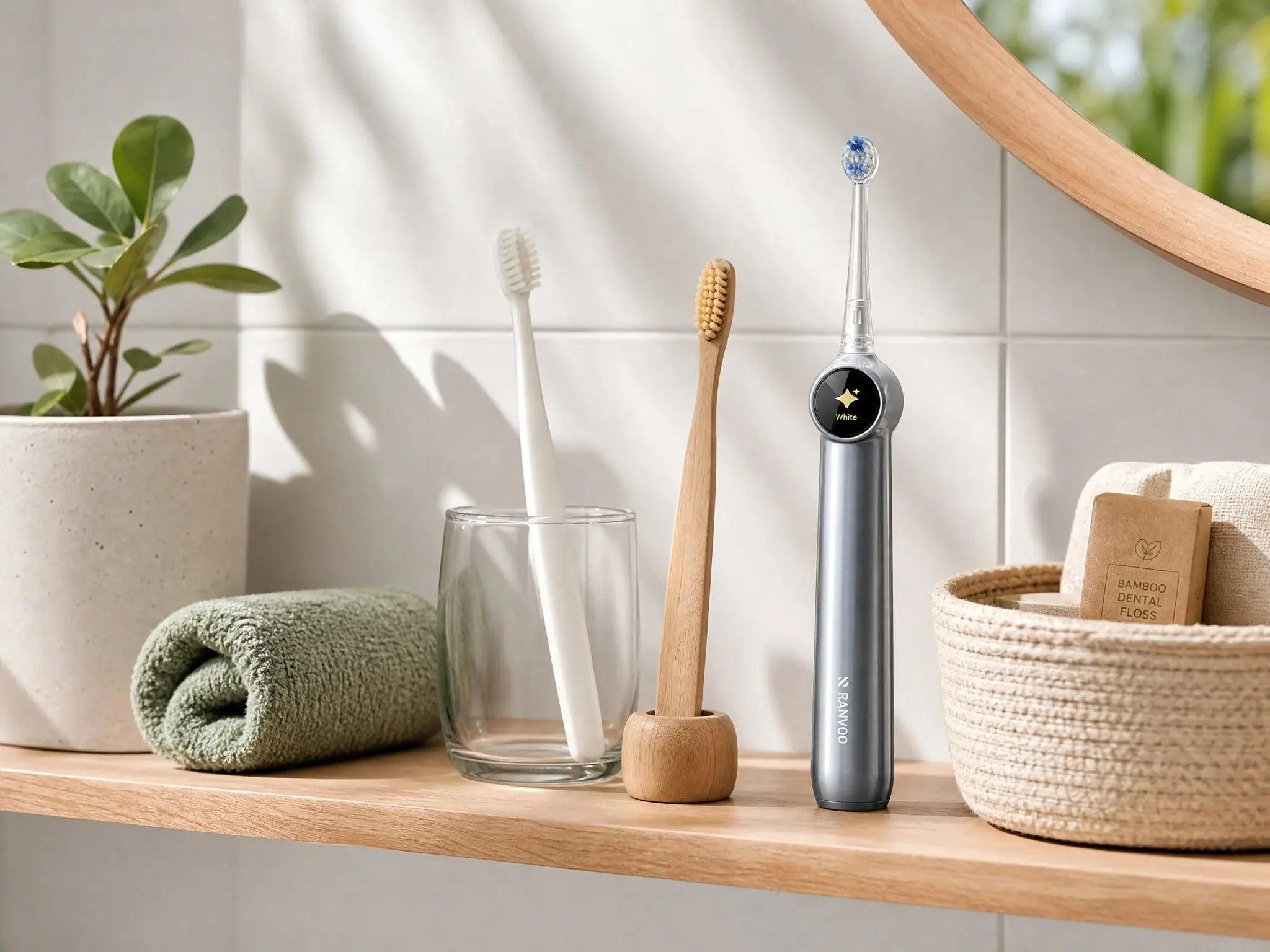
Ein Modell wie die RANVOO AirJet X5 elektrische Zahnbürste verkörpert diese Eigenschaften: Ihr Bürstenkopf verwendet 0,01 mm ultrafeine weiche Borsten mit einer Abrundungsrate von 99,9 %, ein kompaktes Design für einfache Erreichbarkeit und einen strukturierten Griff für sicheren Halt — was sie zu einer sorgenfreien Wahl für empfindliches Zahnfleisch macht.
Borsten elektrischer Zahnbürsten: Noch sicherer?
Die meisten Köpfe von oszillierend-rotierenden und Schallzahnbürsten sind standardmäßig mit weichen oder extraweichen Filamenten versehen. Viele Modelle enthalten außerdem einen Drucksensor , der Sie warnt, wenn Sie zu stark drücken. Diese eingebaute Sicherheitsvorkehrung macht eine elektrische Zahnbürste zu einer ausgezeichneten Wahl, wenn Sie dazu neigen, mit zu viel Druck zu putzen.
Eine manuelle weiche Zahnbürste funktioniert einwandfrei, aber elektrische Optionen können helfen, den leichten Druck und die in klinischen Studien empfohlene Dauer von zwei Minuten einzuhalten. Zum Beispiel kombiniert die RANVOO AirJet X5 ultraweiche 0,01 mm Borsten mit einem Modus mit niedriger Frequenz von 22.000 Vibrationen pro Minute und einer mikro-oszillierenden Bewegung von 12° — für eine effektive Plaqueentfernung (97 % Rate) bei aktivem Schutz des Zahnfleisches vor Abrieb. Die Super Bubble 2.0 Technologie erzeugt sanfte hydrodynamische Kräfte, die Zahnzwischenräume ohne hartes Schrubben reinigen.
Der Wechsel: Wie Sie sich mit einer weichen Zahnbürste wirklich sauber fühlen
Wenn Sie das Gefühl von "geschrubbt sauber" gewohnt sind, kann sich eine weiche Zahnbürste zunächst fremd anfühlen. Das ist eine sensorische Täuschung, kein Zeichen für schlechte Reinigung. Die ADA bestätigt , dass "Ihre fluoridhaltige Zahnpasta den Rest der Arbeit erledigt" — die Zahnbürste ist nur das Verabreichungssystem.
Probieren Sie diese praktischen Schritte:
- Verwenden Sie eine Zahnpasta mit frischem Geschmack — minzig oder mild, sie verstärkt das Sauberkeitsgefühl.
- Probieren Sie einmal pro Woche Plaque-Tabletten — sie färben zurückgebliebene Plaque und beweisen, dass die Zahnbürste funktioniert.
- Stellen Sie einen Zwei-Minuten-Timer ein — längerer, sanfter Kontakt gleicht den reduzierten Abrieb aus.
- Ersetzen Sie die Zahnbürste alle 3–4 Monate — weiche Borsten spreizen sich schneller, ein sichtbares Zeichen für den Austausch.
- Fügen Sie die Reinigung der Zahnzwischenräume hinzu — Zahnseide oder Wasser-Zahnseide-Geräte kümmern sich um Bereiche, die keine Borste erreichen kann.

Wenn Sie weiche Borsten, konsequente Technik und die richtige Einstellung kombinieren, halten Sie Ihre Zähne und Ihr Zahnfleisch ein Leben lang gesund. Die Beweislage ist klar: Weich ist kein Kompromiss — es ist der intelligentere Weg zu reinigen.



Hinterlasse einen Kommentar
Diese Website ist durch hCaptcha geschützt und es gelten die allgemeinen Geschäftsbedingungen und Datenschutzbestimmungen von hCaptcha.